
The Customer:
A leading third-party logistics, or 3PL, provider specializing in food and nutraceutical fulfillment. Their operation served customers with strict compliance needs, including lot tracking and expiration-date controls.


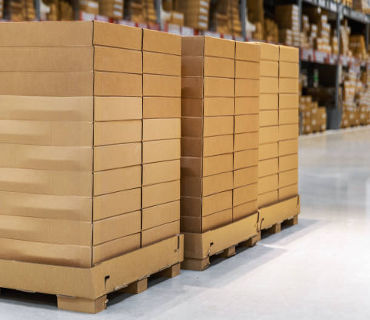
A leading third-party logistics, or 3PL, provider specializing in food and nutraceutical fulfillment. Their operation served customers with strict compliance needs, including lot tracking and expiration-date controls.
Outbound orders increasingly shifted toward partial-pallet profiles. Pick lines had been built for high-volume throughput. But the escalating manual labor needed to meet the case-pick volume overwhelmed the floor, multiplied labor hours, drove overtime, and put service level agreements, or SLAs, at risk.
Order patterns afforded a hidden opportunity. Many partial-pallet orders fell into identifiable configurations that, when pieced together, frequently aligned with full layer quantities. In other words, the warehouse was repeatedly rebuilding by hand, what in sum was a full layer.
To eliminate the bottleneck and automate the optimal assembly of these puzzle pieces, the 3PL implemented a layer-picking process powered by the Codeworks Enterprise platform.
The powerful software already boasted a core framework for layer picking, which streamlined the rollout. Once the operation acquired the forklift attachment and completed the physical setup, the solution amounted to a simple plug and play.
But first, key considerations included:
Implementation focused on configuring the warehouse management system, or WMS, to support the layer-pick workflow. With data powering the software’s decision-making, this included:
Specific forklift attachments enabled picking an entire layer in a single motion and delivering it onto a pallet. The operation could use different styles of clamps based on the need to stabilize varying case sizes and weights.
Critically for a food and nutraceutical client, the process maintained full lot control and expiration-date management. Enterprise leveraged lot and expiration data to prioritize picking the optimal inventory.
Layer picking delivered meaningful operational gains, improving efficiency and profitability while maintaining SLA performance.
Quantifiable benefits included:
Beyond the numbers, layer picking reduced the case-picking grind, improving floor-operator morale.
Thanks to Enterprise’s layer-picking logic, this operation bridged the gap between manual case picking and full pallet automation. This transformed a pain point into a competitive advantage, protecting profit margins and strengthening customer performance.